
My Writing Process + May Reading Roundup
My attempts at novel-writing optimization plus all my May Reads

Last time I wrote about how I thought writing a novel would be like drafting a legal brief and how it is most decidedly not. Today I thought I’d share what my novel-writing process looks like.
When I first decided to write a novel, what began as a light foray into the particular rituals and routines of various writers (e.g. Daily Rituals: How Artists Work by Mason Currey and the Writer’s Routine podcast) quickly became a full-time obsession.
I’ve since experimented with many different processes by many, many writers to find my own path and with three manuscripts under my belt,1 I think I now have a handle on my “process”—and by that I mean, all the varied things I do to entice myself to write. In particular, when I find myself stuck or unmotivated, I know typing away in Word just won’t do it for me: sometimes the only thing that lures me to work is the promise of a glitter binder or a neon pink Post-It.
And that is what it’s all about — just doing it. As the great Ann Patchett said in her essay on writing, The Getaway Car:
Do you want to do this thing? Sit down and do it.
It seems so simple but it’s incredibly difficult! Writing a novel is not a one-and-done process (or at least it’s not for me) and because it’s so daunting and requires so much pure persistence, it’s easier to procrastinate especially when no deadlines loom.
But since I am aiming for a career as a novelist, I have to sit down and do this thing. Here is what I do when I write a novel.
The Inception and Prep Phase
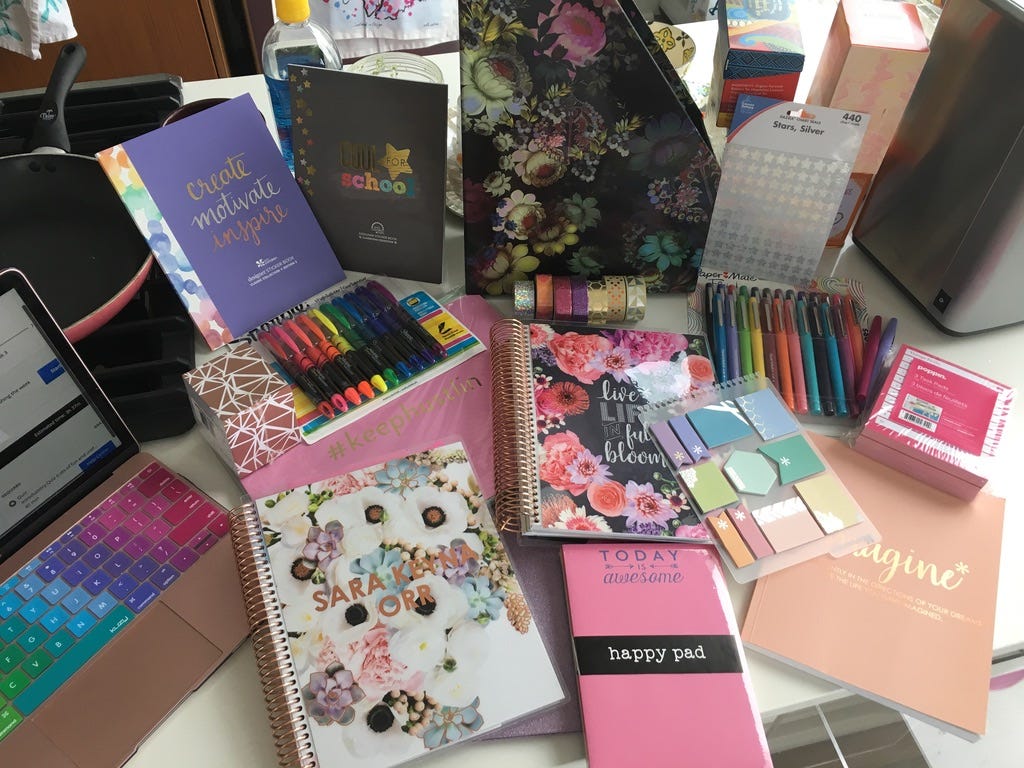
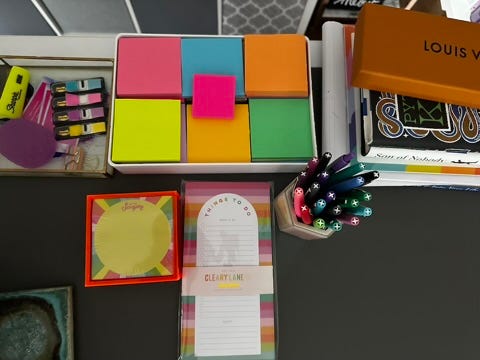
Acquire Beautiful New Notebooks and School Supplies: This is obviously the most important step for starting a novel. And not only one, but multiple notebooks must be purchased specifically for the project at hand. One for notes and character sketches, one for journaling the writing process and one for vibes. Perhaps some others as back-ups, just in case. (These all sit on my desk unused for the most part, but they are critical to my process.)
Gather Research into a OneNote Notebook: I use Microsoft OneNote to clip articles for initial light research. For example, for my female founder novel, I clipped Fast Company and Forbes profiles of founders so I could learn about how they built their business and the obstacles they faced and in this way, my protagonist really came alive.
Draft A Rough Outline: I am a planner, not a pantser. When I know the gist, I’ll quickly sketch out the shape of the story and the beats/scenes I can already see in my head, usually developed over weeks or months. This is always in a color-coded Word table (I’ve tried Excel, OneNote and handwritten outlines but the lawyer in me needs Word to feel alive.)
The “Vomit” First Draft
Wrist-Pain Be Damned: For the initial draft, I set daily word count goals (usually 2K) and aim to get to 80K. I draft in a hot mess of handwritten notes, Word, Google Docs, or Apple Notes snippets and paste these daily into a dedicated Scrivener project. Occasionally I’ll dictate into Word on my phone to minimize wrist usage. Fun fact: you can speak WAY over 2K words while taking a bubble bath! Are they nonsensical? Sometimes. But they are words on the page and that is all that matters to me when I start.
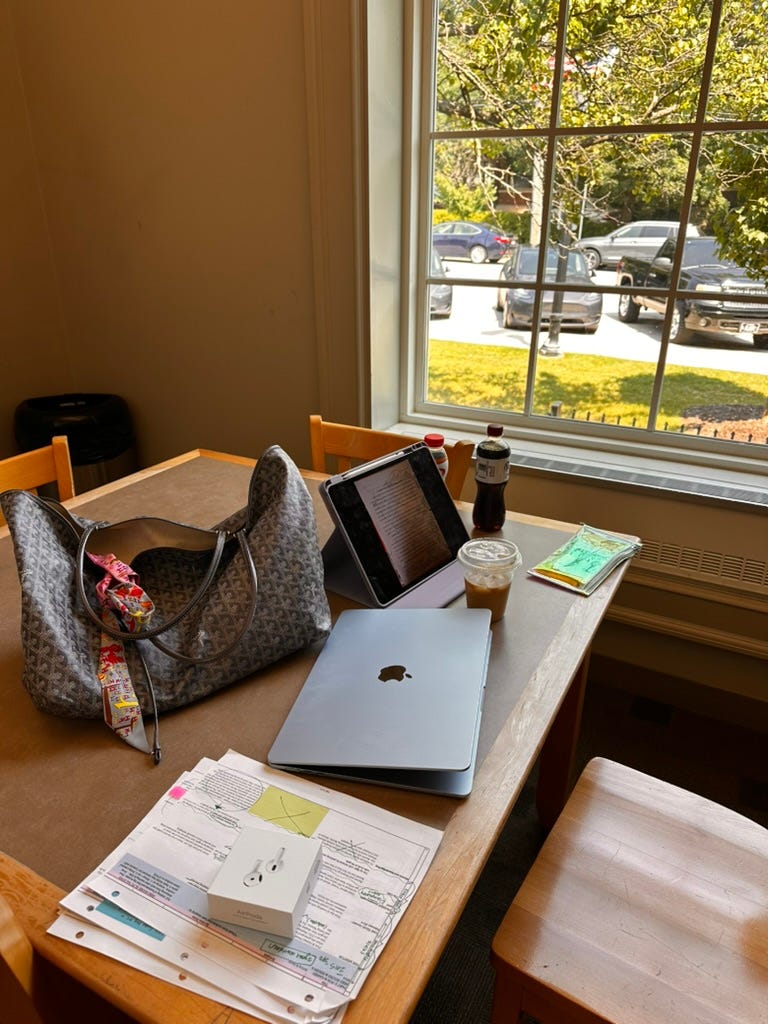
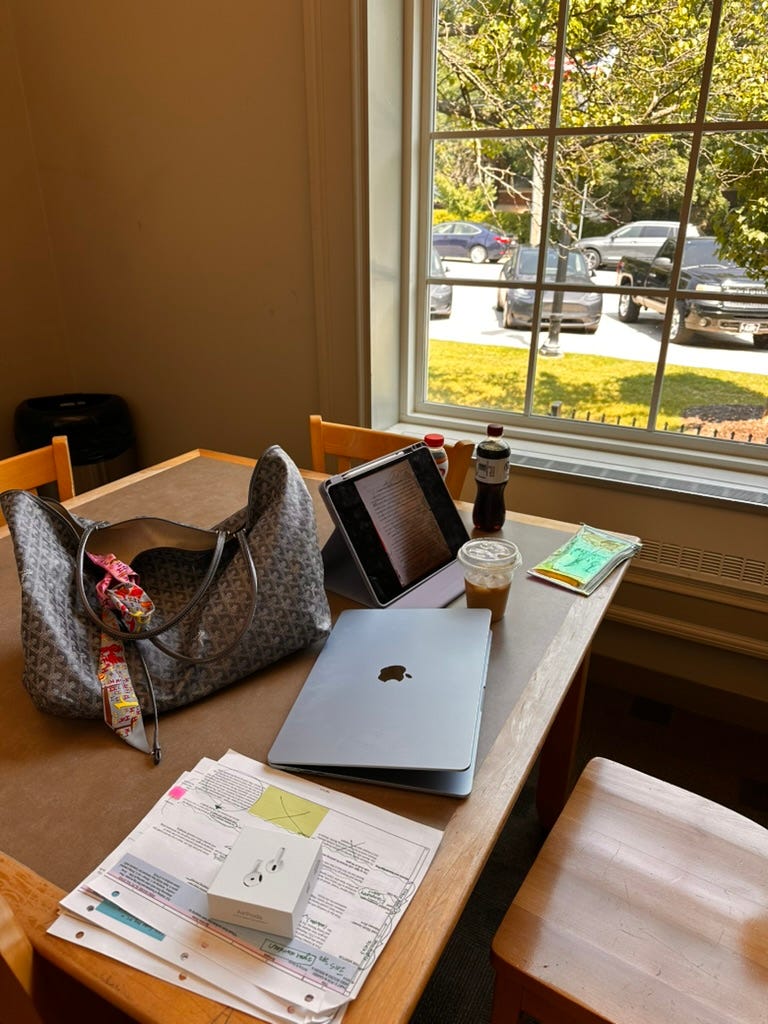
Writing essentials: outline, coffee, sodas and my macbook
The First Read
The Kindle Read: After I finish the first draft, I read it on the Kindle app on my iPhone or iPad (in bed or in the bath, like it’s a real book) and jot down notes by hand in one of my aforementioned beautiful notebooks. Mostly my notes are brilliant insights like, “WTF?” and “HUH??” Very occasionally will I give myself a star or a happy face.
The Marination Month: Then I wait a month and don’t look at the draft. Instead, I let it percolate and work on something else to let my subconscious consider what I’m trying to say, how I want the reader to feel, and what the overarching point is (or at least, what I think it is.)
The Second Draft
Reverse Outline: After the marination month, I read the first draft again and reverse-outline it in a Word table. I use rows for each scene and jot down 2-3 sentences to summarize then quick and dirty bullets on what needs to be fixed on a structural level.
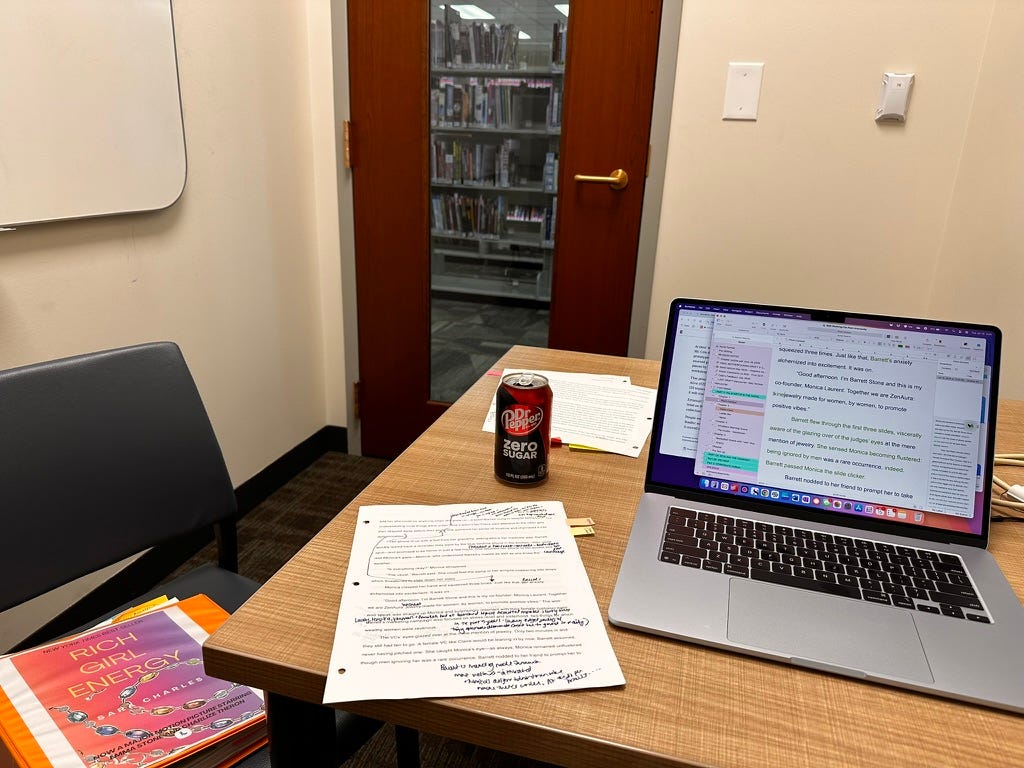
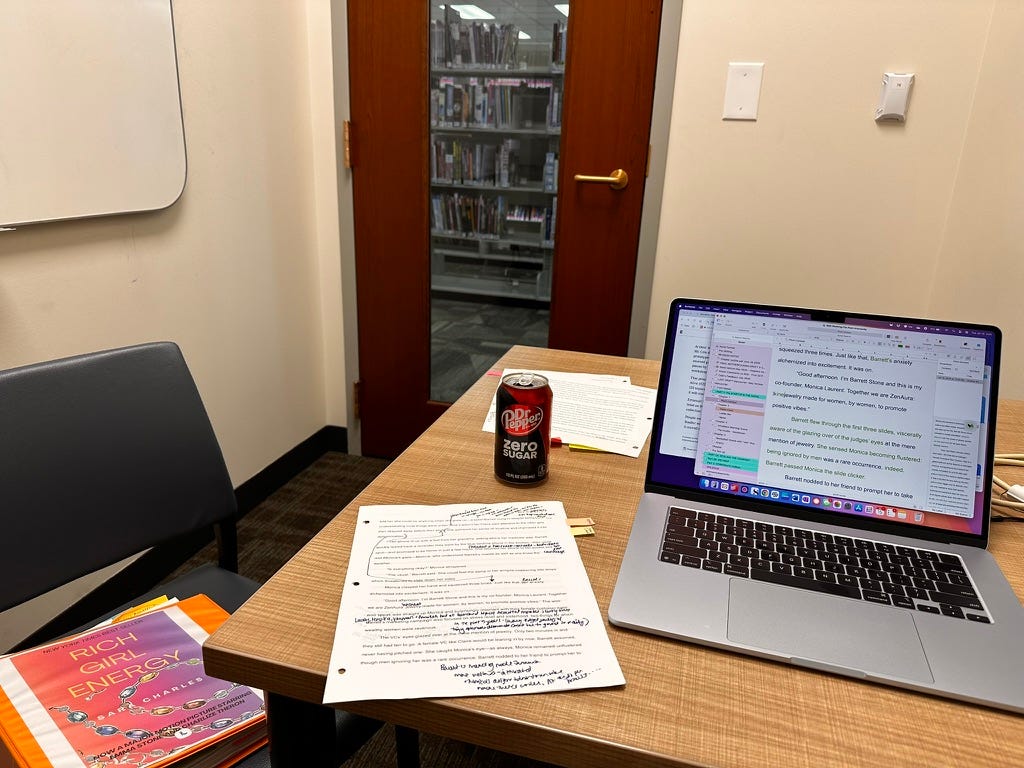
Here you can also see the book cover I made for my first novel to help me feel like I was writing a real book Get My Research On: I then take the time to figure out what I need to learn about in order to make the story feel real. I’ll interview people, read primary source material, conduct internet research, go on field trips, etc. Most importantly, I try to set a limit on the number of hours I can spend researching because otherwise it is all I would do. For example, I probably could have stopped researching my female founder novel after listening to the 1,500th How I Built This podcast but then Meghan Markle’s Confessions of a Female Founder podcast came out. . . then Emma Grede’s Aspire . . and so on.2
The Clean Slate: I start the entire draft over, retyping a lot from memory but informed by my semi-understanding of what I’m trying to say per my new chapter outline. (I thought this was a little crazy but turns out lots of authors rewrite from scratch, including Lauren Groff; it’s eerie how much I recall from the first draft and retype precisely into the second, and those are the things that matter.)
Living in the World (Getting Crafty with It)
Once I am into Draft 2 and see my characters clearly, I start the most fun part!
Casting Sheets: Using Canva, I create collages with photos of actors who could play my characters and then hang them on the walls. Gwyneth, Reese and Mindy often star in my projects. So does Billy Crudup.
Spotify Playlist: I build a vibe-specific playlist for each project. I can’t listen to music with words while writing but I listen to it while getting ready in the morning so I can arrive “in the zone” before the work begins.
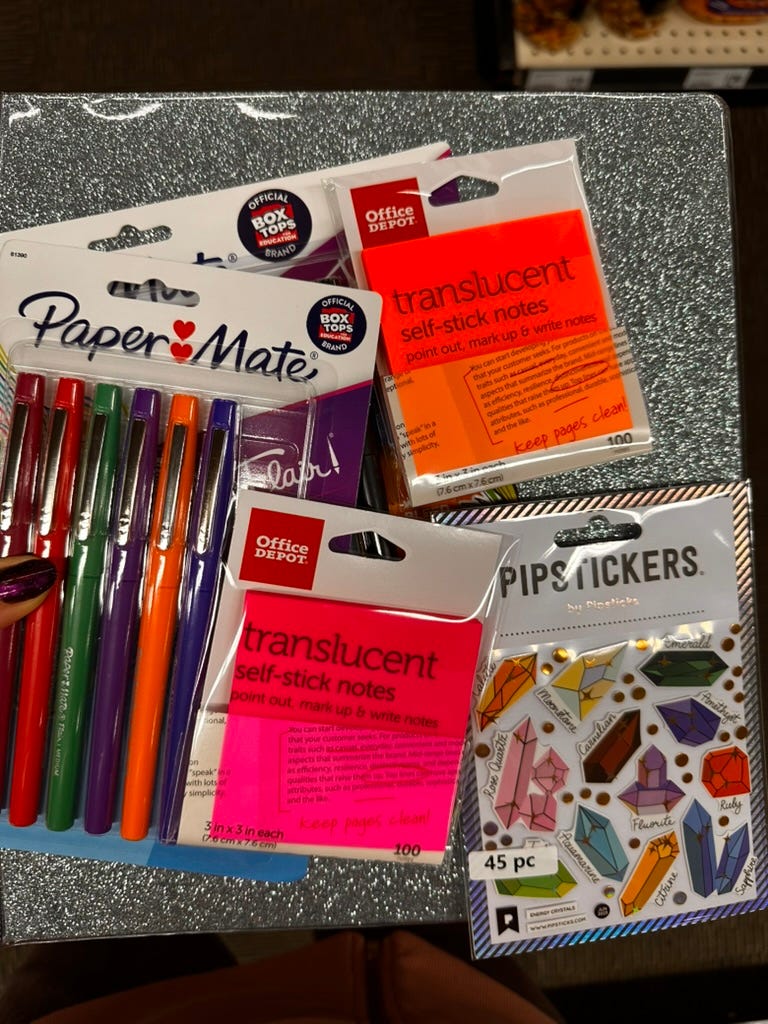
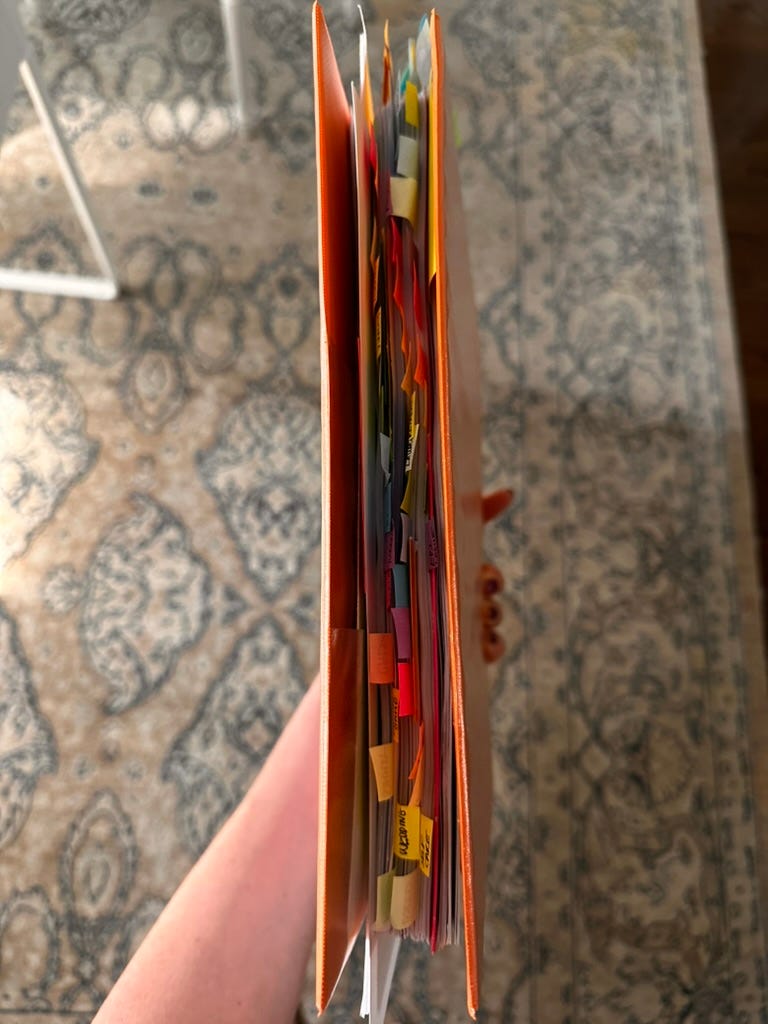
Post-It & Binder Pass: I put each printed draft in a beautiful binder, ideally glitter, hot pink or Hermès orange. Then, I markup by hand with color-coded Post-Its, like the most beautiful rainbow-feathered bird. To input the markup, I take photos of my notes so I can view side-by-side with Scrivener on my dual monitors.
The Revision Cycle (Drafts 2 - ?)
Iterative Drafts: After the story structure is semi-baked, each subsequent draft focuses on one element: pacing, characters, dialogue, setting, language, theme, etc. I rotate through all of the above (Scrivener files, outlines, etc.) and I also change the font in between drafts so my eyes catch new things.
Ritual Cycling: Often, the revisions seem insurmountable! So I must try new rituals and processes for each draft. I switch up the software, location, keyboards and flavor of tea, etc.
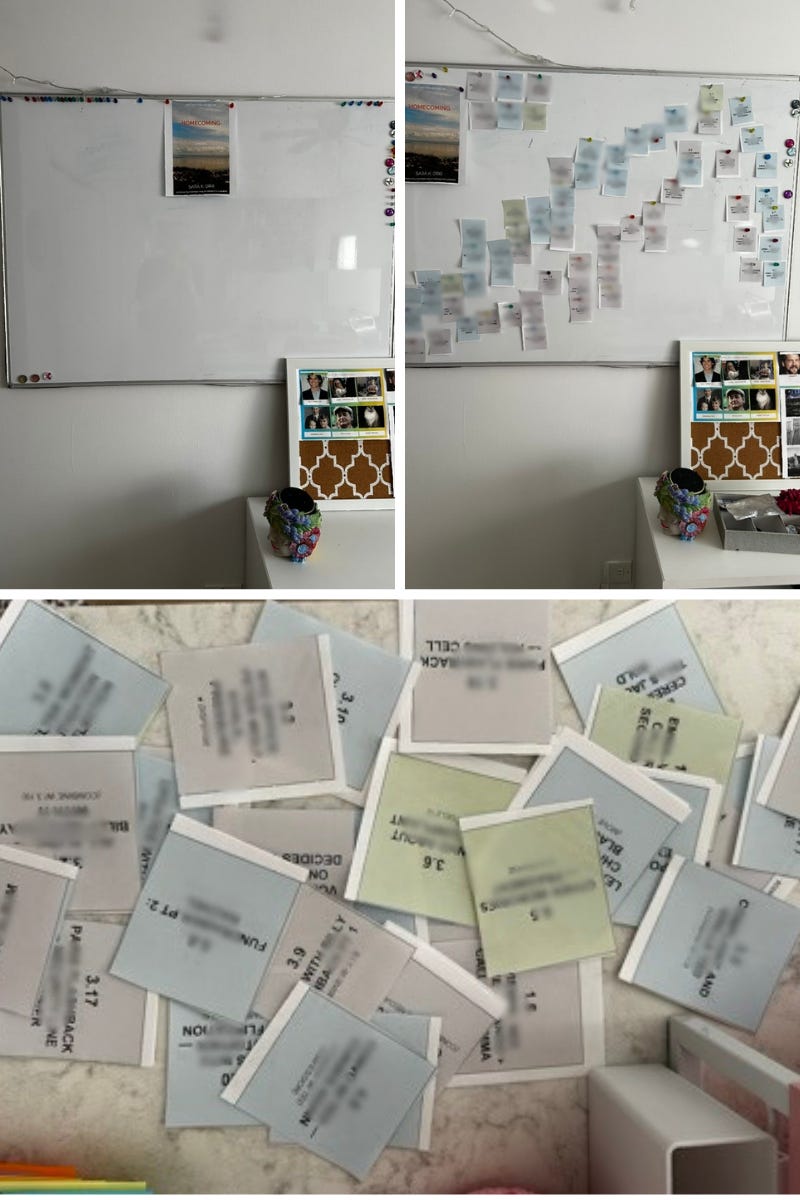
Whiteboard Scene Cards: Once I’m a few drafts in, I make visual scene cards on my giant whiteboard or a tri-fold posterboard. The below is one I did for my paper mill novel: as you can see, I am writing two POVs and needed to get a sense of the balance (or lack thereof) and rising tension.
The Final Touches
The Copyedit: When I reach the point where I need external feedback (e.g., beta readers or a developmental editor), I copyedit my little heart out. This is where my BigLaw OCD/ATD shines, and includes reading everything out loud to fix nits as I go.
Send Into the World: This is the absolute hardest part: knowing when I’m done! After so. many. drafts. of my female founder novel, I knew I’d done everything I possibly could and needed to query.3 I made myself send Draft 6 of my paper mill to beta readers to get feedback earlier in the process but I could have done several more drafts. I hope to query that one this Fall but only when I am 100% sure it is ready.
On Repeat: If I’m lucky, I’ll get an agent some day and a book deal which will come with more suggested edits and revisions, and thus continue working on the novel for another two years+. This is the part I am most excited about - expert feedback and deadlines. Until then, it is all up to me. . .
Conclusion
The result of the above writing process is a sense of confidence that, each day, I can start anew and experiment as necessary to continuously learn. As a lawyer turned writer, fiction is new to me and trying new things brings me such joy. Perhaps I’ll handwrite my next novel while lounging in bed, or write it on a treadmill like Ann Patchett. Maybe I’ll wake up at 4 a.m. to write like Haruki Murakami. Perhaps, in a future utopia, I will simply write one, perfect draft (but where is the fun in that?)
But most likely, I’ll keep treating novel-writing like a lawyer job and keep grinding away. I’ll sit at my desk every morning, staring at multiple monitors while tracking my time, fueled by unbelievable amounts of coffee and Diet Dr. Pepper, and vary my process but not my time in the chair.
And sometimes I’ll feel like I’m still in my law firm job and not a capital “c” Creative, but that’s okay. Because the sequence of steps, the shiny new writing toys, and the creative rituals are what motivate me to get my butt in the chair and actually do the work.
And that’s what Ann Patchett wants me to do.
Everything I Read in May
I read some terrific books last month and, as I sometimes tend to do, went all-in on one novel: Yesteryear by Caro Claire Burke.
One of the breakout hits of the year, it’s about a popular tradwife influencer who wakes up one day in what seems to be the olden times. I have so many thoughts about the novel, the marketing campaign, the discourse around tradwives and girlbosses and the performance of womanhood, the brilliance of the hook - but for now, please just read it and let me know what you think!


Other books I read last month:
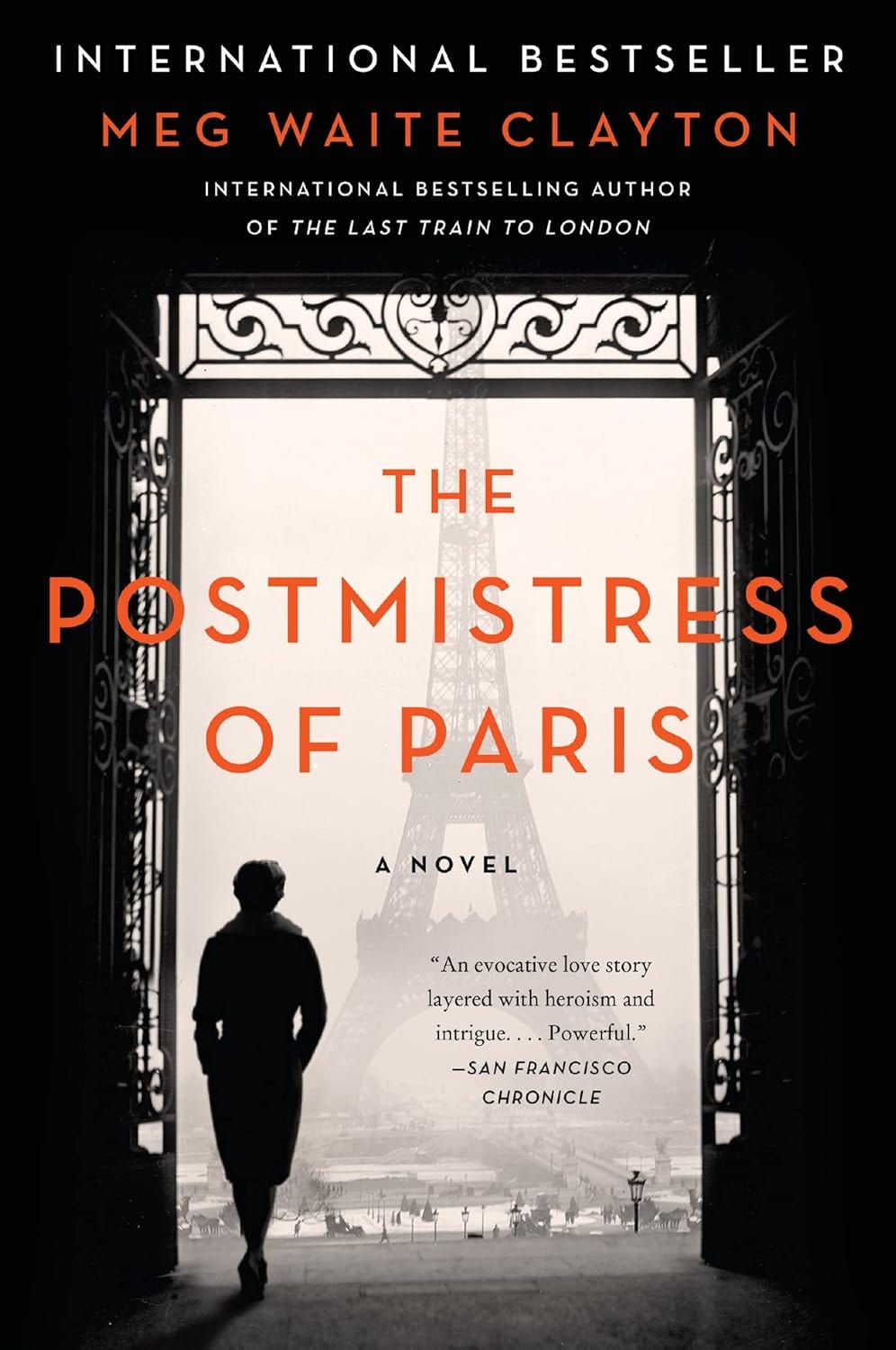
The Postmistress of Paris by Meg Waite Clayton. A wealthy heiress from Evanston risks everything to smuggle artists and intellectuals out of occupied WWII France. She also flies planes and loves her dog Dagobert, who is delightful. This needs to be a movie, please.
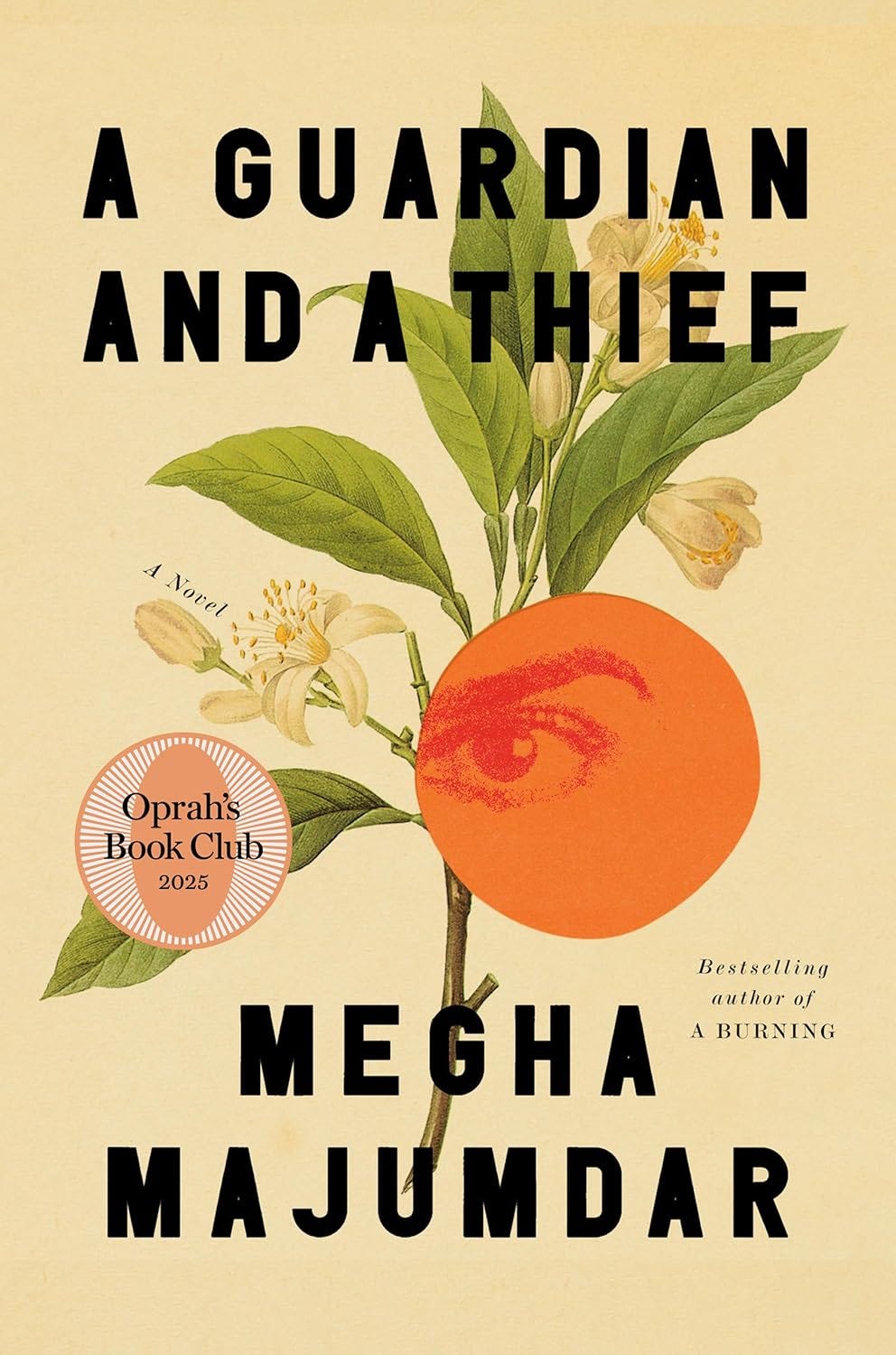
A Guardian and a Thief by Megha Majumdar (an Oprah pick). A mother, daughter, and grandfather in near-future Kolkata are trying to reach Ann Arbor on climate visas and a young villager named Boomba is desperate to help his own family. The whole novel unfolds over one week and while too short at 224 pages, it’s a ticking clock done right. Depressing and beautiful!
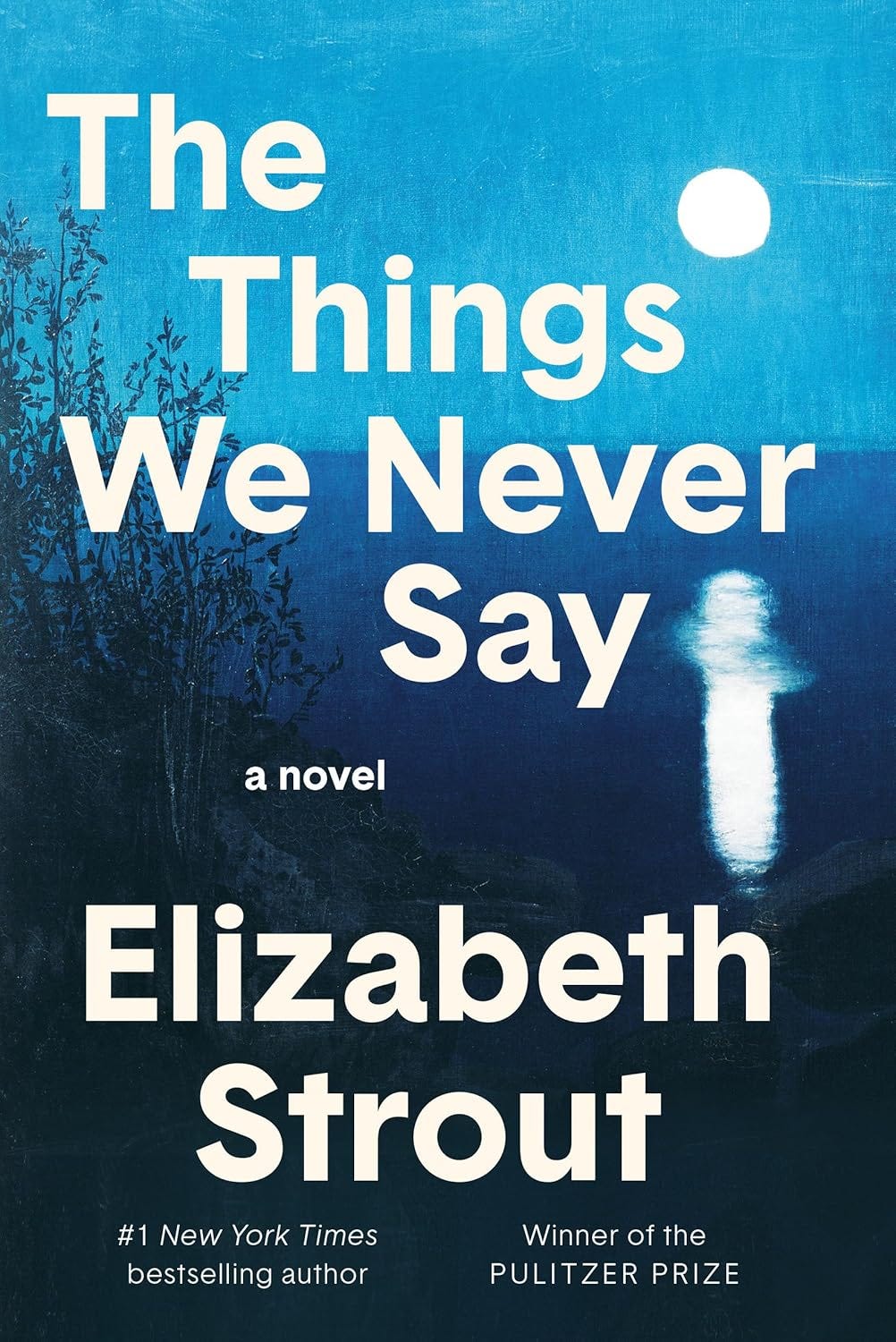
The Things We Never Say by Elizabeth Strout also clocks in at 224 pages (why are books so short?! I like BIG books and I cannot lie!) This one is about a lonely midlife high school teacher whose wife is keeping a secret and it carries a particular kind of quiet, post-2024-US-election existential weight before shit really hit the fan.
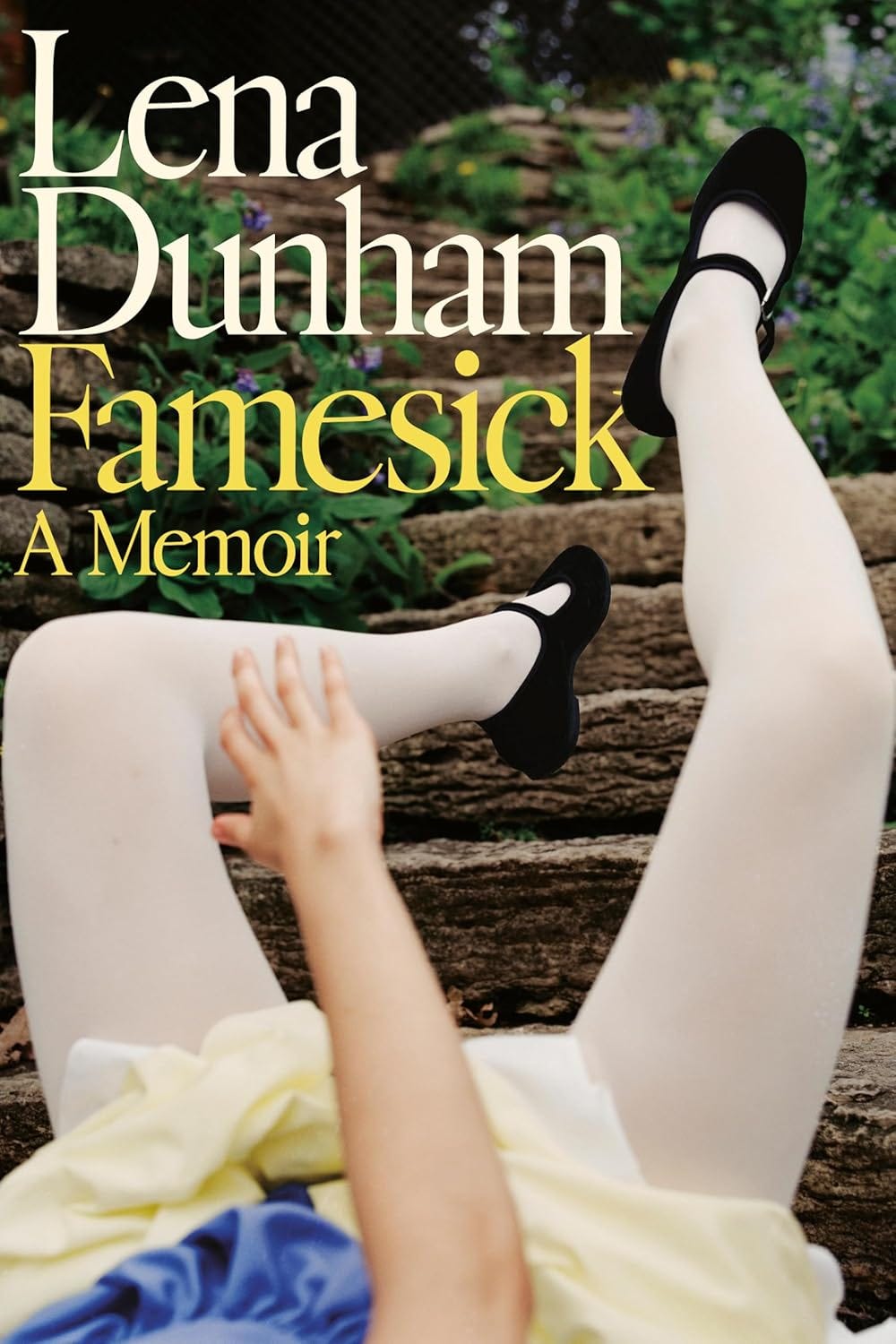
Famesick by Lena Dunham (audiobook on Spotify). I loved Girls and I love Lena Dunham’s voice and her tenderness toward animals. This memoir leaned hard into illness, medication, addiction, Hollywood gossip, sex and a long catalog of grievances. It was hard to listen to but fascinating.
Since 2023, I’ve finished three manuscripts: one first-draft in the drawer, one completed and querying, and one work-in-progress.
Based on the amount of research I did, I am 99% sure I too could start a billion-dollar brand and take my company public, but sadly, I have neither the energy nor the guts to ever try. I’ll stick with this whole writer career change instead, I hear it’s equally lucrative. :)
Here’s a secret: I really don’t like being rejected. I tried to publish my first attempt at a short story, written in a two-week fever dream in my first adult creative writing class, and after 10 rejections from literary magazine, knew it needed to live in my drawer. To trick myself into applying for workshops and submitting other things, I now reward myself for each rejection. Not to brag but I’m up to 52 as of the date of this Substack!